
Acupuncture originates from ancient Traditional Chinese Medicine (TCM) 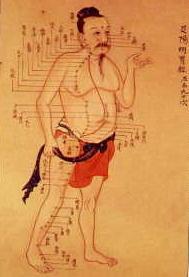 almost 3,000 yrs ago. It involves the insertion of fine needles into the skin and underlying tissue. The points at which they are inserted correspond to acupuncture points. The fundamental concept of acupuncture is based on balancing the body ‘Qi’ (pronounced ‘chee’) pertaining to the body’s ‘Vital force energy’. Qi is described as circulating around the body in 12 major meridians (or channels), supported by 8 extra meridians, 15 collaterals and others. The meridian pathways travel in the limbs, trunk, head and neck. In the case of physical or mental illness, there is a disturbance in its flow. Acupuncture believes that the body has the ability to heal itself by correcting any imbalances in the Qi. Diagnosis and treatment is based on the theory of Yin and Yang balance, Five Element Theory and the Eight diagnostic criteria. When practiced by qualified professionals, acupuncture is a safe treatment with few side effects. Minor after effects may include drowsiness, bleeding or bruising around the needle site.
TCM Acupuncture can be used in a variety of conditions, including pain symptoms, gynaecological, gastro-intestinal immune and neurological problems. In addition to acupuncture, practitioners may use moxa (a herbal heat treatment) and cupping treatment, both part of the TCM system of medicine. Moxa helps to stimulate the Qi energies, while cupping enhances blood and lymphatic flow, as well as nerve function. Combined with massage, it helps to reduce muscular and tissue tightness, and adhesions by lifting and loosening the skin and muscles e.g. for tight back or frozen shoulders.
Western medical acupuncture (also known as Dry Needling) is a modern adaptation of TCM acupuncture and is mainly used for the treatment of pain. Many physiotherapists, osteopaths or chiropractors have now incorporated it into their treatments. Instead of the meridian theory and TCM acupuncture points, it uses the modern medicine concepts of the ‘Gate control theory of pain’. This theory is based on affecting the interaction of different neurons.
What happens during a therapy session?
During a session you will usually be asked to lie down on a treatment couch. The practitioner will start by assessing your health status, and conduct a diagnostic process. This may include examination of the pulse, tongue and other general appearance, and examination of the problem areas. Fine single-use sterile needles are inserted into relevant parts of the body. These are normally single-use and then disposed of, thus removing the risk of cross-infection. Other than the initial sting at insertion, once the needles are in, there should be no pain. These needles may be left for about 20-30 min and then removed. In some cases, practitioners may use cupping, moxa (a small spongy herb also known as mugwort) or electro-acupuncture to enhance the healing process. Each session lasts around 44-60 min long.
How can Acupuncture help ?
TCM Acupuncture is an ancient system of medicine which can help most health conditions, including musculoskeletal pain, inflammation, arthritis, back pain, stroke, PMT, fatigue, stress, anxiety, depression, allergy, IBS and overall well-being. Acupuncture is believed to stimulate the circulatory and nervous system, causing the release of neurochemicals (serotonin and endorphins) that influence biochemical changes within the body’s homeostatic mechanisms, thus promoting physical and emotional well-being.
- Make changes in fibroblasts and mast cells to release body chemicals and change the way the brain and spinal cord process the pain signals. These chemicals include: endorphins and other neurohumoral factors, e.g. neuropeptide Y, serotonin.
- Increases local release of nitrous oxide (NO), known to play an important physiological role in skin local microcirculation, neurotransmission, immunity and wound healing.
- Increases the release of adenosine, which reduces the sensitivity to pain
- Modulates parts of the brain network (limbic and paralimbic system), responsible for anti-pain, anti-anxiety, and other therapeutic effects
- Reduces inflammation by releasing factors responsible for vascular and immune system regulation.
- Improves muscle stiffness and joint mobility by increasing local microcirculation, and therefore, the resolution of swelling.
- Benefit depression by acting through other pathways involving dopamine, noradrenaline, cortisol and neuropeptide Y. Stress-induced behavioural and biochemical changes may also be reversed. Acupuncture can generally be safely used in combination with medical treatments.
Read more about the mechanism and applications of acupuncture below;
- Acupuncture: How does it work ?
- Cabyoglu MT, Ergene N. The mechanism of acupuncture and clinical applications. Intern. J. Neuroscience, 2006; 116: 115-125.
Revised: 22/5/2026